
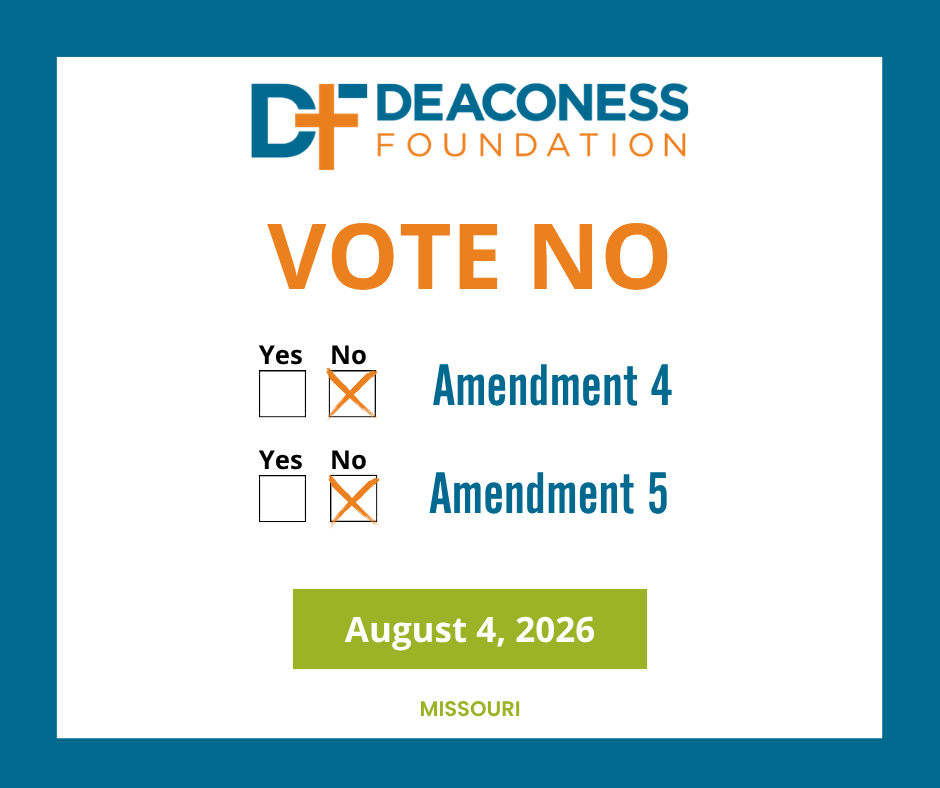
July Newsletter | Why Missouri Voters Should Reject Amendments 4 and 5
As the United States marks its 250th anniversary, we should be asking more than whether our democracy has endured. We should be asking whether people still have meaningful ways to shape the decisions that govern their lives.
In Missouri, two constitutional amendments on the August ballot would weaken that power. Amendment 4 would make it substantially harder for voters to amend the state constitution through the initiative process. Amendment 5 would begin phasing out Missouri’s individual income tax while opening the door to taxes on more of the goods and services people use every day.
The proposals address different subjects, but they share a troubling feature: both would give state lawmakers greater control while leaving ordinary Missourians with fewer protections.
Amendment 4
Amendment 4 would replace Missouri’s longstanding rule that a citizen-led constitutional amendment passes when it receives a majority of votes statewide. Under the proposed system, an amendment would need both a statewide majority and a majority in every one of Missouri’s eight congressional districts.
That means voters in a single district could defeat a measure supported by a majority of voters across the state. A statewide majority would no longer be sufficient to determine the result. A proposal could receive hundreds of thousands more votes in favor than against and still fail because it fell short in just one district.
This may be cloaked as minor procedural adjustment. It is much more. It would fundamentally change who holds power in Missouri.
The initiative process gives citizens a way to act when the legislature will not. Missourians have used it to raise the minimum wage, expand Medicaid, legalize adult-use marijuana, establish paid sick leave, and protect reproductive freedom. Voters may disagree about any one of those decisions. But the essential principle is that Missourians had the right to place those questions before the public and decide them by majority vote.
Amendment 4 would preserve the appearance of that right while making it much harder to exercise. It would effectively give each congressional district veto power over the rest of the state. It would also tie the outcome of statewide votes to district lines drawn through a political process.
If Amendment 4 had been the rule in previous elections, some measures approved by a majority of Missourians might not have passed. That is precisely why voters should reject it. The rules of democracy should not be rewritten because those in power dislike decisions the people have made.
Amendment 5
Amendment 5 presents a different but equally consequential choice.
The measure would require the legislature to enact laws phasing out Missouri’s individual income tax based on revenue growth. Once that tax is eliminated, the state would be prohibited from reinstating it. The amendment would also authorize lawmakers to extend sales and use taxes to goods and services that are not currently subject to them.
Supporters emphasize that Missourians would eventually stop paying state income tax. But the measure is not simply a tax cut. It authorizes a fundamental shift in how Missouri raises revenue: away from taxes based on income and toward taxes on what people buy.
That distinction matters. Income taxes are tied to how much a person earns. Sales taxes are tied to what a person spends. Families with low and moderate incomes generally must spend a greater share of what they earn to meet immediate needs. Extending sales taxes to more goods and services can therefore take a greater share of their household income, even if they receive some benefit from a lower income-tax rate.
Amendment 5 does not tell voters which additional purchases or services would be taxed. It does not establish the rates they would pay. And it does not tell individual Missourians whether the income taxes they save would be greater or less than the additional sales taxes they could owe. Even the official ballot language acknowledges that the effect on taxes is currently unknown.
The amendment would also allow implementing legislation enacted within five years to avoid the normal constitutional requirement that voters approve significant state tax increases. In other words, voters are being asked to authorize a major tax restructuring now while leaving many of its most consequential details for lawmakers to decide later.
Missourians should not amend their constitution without knowing what may be taxed, at what rate, or who will ultimately pay more. A change this significant should provide voters with greater certainty and accountability.
Amendments 4 and 5 would affect Missourians differently, but neither is an abstract question. Amendment 4 determines whether a statewide majority can continue to enact change through the initiative process. Amendment 5 determines how Missourians may be taxed and how much authority lawmakers will have to redesign the state’s tax system.
Missourians should not surrender majority rule or authorize a major tax shift without knowing what additional goods and services could be taxed or who would ultimately pay more. Voting no on Amendment 4 protects the principle that statewide questions should be decided by a statewide majority. Voting no on Amendment 5 rejects an uncertain tax restructuring whose consequences have not been fully defined for Missouri households.
On August 4, Missourians should keep power with the people and vote no on Amendments 4 and 5.
In service to the mission,
Constance Harper
Vice President, Strategic Impact & Innovation
Read the full July 2026 newsletter here.